Showing posts with label Chevrolet. Show all posts

Monday, August 30, 2010

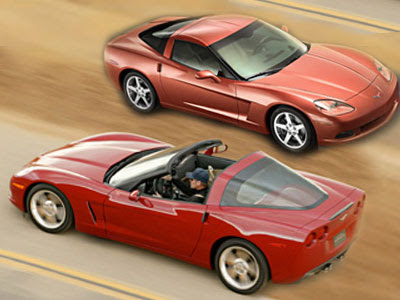
C6 Chevrolet Corvette A new LS2 Sport Car


C6 Chevrolet Corvette A new LS2

Dave Hill,
chief engineer of the Corvette and vehicle line executive for GM Performance Cars.The C6 represents a comprehensive upgrade to the Corvette.The Corvette C6 was introduced in 2005 to replace the outgoing C5 (1997 - 2004) model.
Blends technical sophistication with expressive style The sixth generation Corvette. Five inches shorter than the C5, the C6 Corvette cuts a tighter, more taut profile – with virtually no loss of usable space. More than just visual, the new dimensions make the car more agile and “tossable,” with upgrades in handling, acceleration and braking. At 0.28 coefficient of drag, the C6 is the most aerodynamically efficient Corvette ever and has improved anti-lift characteristics that enable improved high-speed stability and confidence.
C6 Chevrolet Corvette A new LS2


A new LS2 6.0-liter small-block V-8 is the standard engine in the Corvette C6. It is based on GM’s new Gen IV small-block family of engines.
The LS2 raises the bar for standard performance in the Corvette, delivering estimated peak output levels of 400 horsepower and 400 lb.-ft. of torque. It is the largest, most powerful standard small-block engine ever offered in Corvette.

Sunday, August 29, 2010

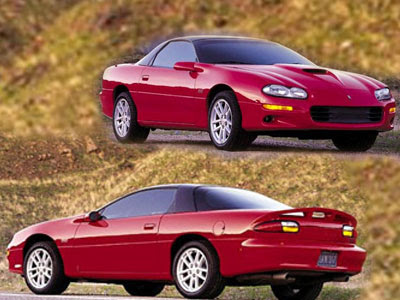
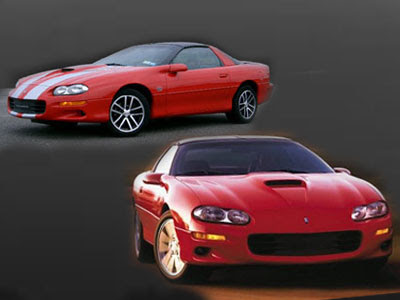
Z28 Chevrolet Camaro LS1 V8 Sports Coupe


Z28 Chevrolet Camarore LS1 V8 Sports Coupe


The MK IV Chevrolet Camaro retained the same layout as the very first Camaro's back in 1967, 2-doors, 2+2 seating, rear-wheel drive, choice of V6 and V8 powerplants, and available in both coupe and convertible forms (the convertible was introduced in 1994).
The fourth-generation Chevrolet Camaro debuted for the 1993 model year on the previous generation Camaro platform.
Z28 Chevrolet Camarore LS1 V8 Sports Coupe


The MK4 Camaro
featured the 5.7 L (350 cid) LT1 V8 engine that had been introduced in the Corvette one year earlier, as well as an optional six-speed manual transmission. The 1998 model year was refreshed and revised with both exterior and engine changes. Replacing the LT1 was GM's all-new 5.7 L (346 cid) LS1 which had been introduced with the Corvette C5.
The Camaro is to return in 2009 however as a retro styled sports coupe.
The fourth-gen Camaro would last up through the 2002 model year, at which point production was stopped due to slow sales.

Saturday, July 17, 2010

2010 New Chevrolet Camaro Sports Car UFC Limited Edition

Most great and amazing sport elegant car 2010 Chevrolet Camaro interior design and exterior body kit design that will make you interesting. The UFC sports car maker now a days launched it is teaming up with Findlay Customs and Modern Muscle Las Vegas to release 10 Limited Edition UFC Chevrolet Camaros sports car. UFC, in combination with Findlay Customs and Modern Muscle Las Vegas will build the limited-edition 2010 UFC Camaros sports car complete with 650 Super-charged powerful engine horsepower and one-of-a-kind vehicles features which will create even the most die-hard UFC fan or gear head stand up and get notice.
2010 New Chevrolet Camaro Sports Car UFC Limited Edition
The 2010 Chevrolet Camaro sports car looks like a new vehicle, but it was built from existing GM parts from other models. They started with the chassis architecture of the impressive Pontiac G8 and engines from Cadillac and Covette. GM made the new Camaro drop-dead gorgeous, with high performance, and affordable.
The interior of the new Camaro is comfortable and materials are good, but the exterior styling is where it shines. The stitched leather wrap on the steering wheel is nice, and the bucket seats are comfortable, with decent bolstering, but may not be enough to keep an aggressive driver in his or her place during aggressive cornering. 
The front seat slides 8.5 inches, the steering wheel tilts and telescopes, and the seat can be raised up for better visibility, so drivers of all sizes will fit. The excellent leather upholstery is available in black, gray, beige and two-tone Inferno Orange.
The climate control buttons on the center stack didn't seem to be designed for ease of touch, but more for looks, but I have seen worse. Visibility through the windshield is good despite the long hood and raked windshield, thanks to careful location of the driver's seat and the ability to raise it. Rear visibility over the driver's shoulder isn't very good, but then it's impossible to make it good with a chopped roofline that gives it its sporty look.
The new Camaro sports car succeeds for all the reasons to buy this sports car, great looks and styling, a very potent and efficient engine borrowed from Cadillac, great performance and handling, and a good price point. I have test driven the Dodge Challenger SRT8, and the Ford Mustang GT. For my money I would choose the new Camaro sports car.
The first UFC Camaro will be auctioned off at Barrett-Jackson's Orange County collector car auction taking place June 25-27 at the OC Fair & Events Center.  The winning bidder will also come away with a UFC experience package that includes an inaugural drive with UFC President Dana White, backstage VIP access to a UFC event, meet and greets with UFC fighters, an autographed OCTOGON book and UFC gear.  
The Camaro is being auctioned for the Intrepid Fallen Heroes Fund, a charity dedicated to providing financial assistance to dependents of US military personnel lost in the line of duty.
Thursday, July 15, 2010

Chevrolet Camaro Transformers, 2010

Chevrolet Camaro Transformers, 2010


Fans of the new Chevrolet Camaro and the blockbuster Transformers movies can now combine their love of the car and the films with the Chevrolet Camaro Transformers Special Edition announced today at Comic-Con in San Diego.

Features such as an EPA-rated 29 highway mpg on the V6-powered Chevrolet Camaro, Bluetooth phone connectivity, USB connectivity, XM Satellite Radio and OnStar combined with Transformers design cues add to the car's status as a 21st century sports car.

Chevrolet Camaro Transformers Special Edition:
* Autobot shield on the driver and passenger side panels
* Autobot shield on each of the four wheel's center cap
* Autobot shield embroidered on interior center console
* "Transformers" logo on driver and passenger doors' sill plates
* "Transformers" logo embedded into the hood rally stripes
* High-gloss black center rally stripe package
* Manufacturer's suggested retail price of package: $995

The V6-powered Chevrolet Camaro uses a 3.6L engine with variable valve timing to optimize performance and fuel economy. It is SAE-certified at 304 horsepower (227 kW) and 273 lb.-ft. of torque (370 Nm). A six-speed manual transmission is standard with the 3.6L engine; a Hydra-Matic 6L50 electronically controlled six-speed automatic, with TAPshift control.

The high-performance Chevrolet Camaro SS is equipped with a powerful 6.2L V-8, with a choice of a six-speed manual or six-speed automatic transmission. Manual transmission-equipped models receive the LS3 engine, SAE-certified at 426 horsepower (318 kW) and 420 lb.-ft. of torque (569 Nm). It is paired with a TR6060 six-speed transmission.

The L99 V-8 engine is used on automatic transmission-equipped SS models. It is based on the LS3, but also includes GM's fuel-saving Active Fuel Management feature. It is SAE-certified at 400 horsepower (298 kW) and 410 lb.-ft. of torque (556 Nm). It is matched with a Hydra-Matic 6L80 six-speed transmission that helps delivers an EPA-estimated 25 mpg on the highway.

Chevrolet Camaro Transformers, 2010

Chevrolet Camaro Transformers, 2010


Fans of the new Chevrolet Camaro and the blockbuster Transformers movies can now combine their love of the car and the films with the Chevrolet Camaro Transformers Special Edition announced today at Comic-Con in San Diego.

Features such as an EPA-rated 29 highway mpg on the V6-powered Chevrolet Camaro, Bluetooth phone connectivity, USB connectivity, XM Satellite Radio and OnStar combined with Transformers design cues add to the car's status as a 21st century sports car.

Chevrolet Camaro Transformers Special Edition:
* Autobot shield on the driver and passenger side panels
* Autobot shield on each of the four wheel's center cap
* Autobot shield embroidered on interior center console
* "Transformers" logo on driver and passenger doors' sill plates
* "Transformers" logo embedded into the hood rally stripes
* High-gloss black center rally stripe package
* Manufacturer's suggested retail price of package: $995

The V6-powered Chevrolet Camaro uses a 3.6L engine with variable valve timing to optimize performance and fuel economy. It is SAE-certified at 304 horsepower (227 kW) and 273 lb.-ft. of torque (370 Nm). A six-speed manual transmission is standard with the 3.6L engine; a Hydra-Matic 6L50 electronically controlled six-speed automatic, with TAPshift control.

The high-performance Chevrolet Camaro SS is equipped with a powerful 6.2L V-8, with a choice of a six-speed manual or six-speed automatic transmission. Manual transmission-equipped models receive the LS3 engine, SAE-certified at 426 horsepower (318 kW) and 420 lb.-ft. of torque (569 Nm). It is paired with a TR6060 six-speed transmission.

The L99 V-8 engine is used on automatic transmission-equipped SS models. It is based on the LS3, but also includes GM's fuel-saving Active Fuel Management feature. It is SAE-certified at 400 horsepower (298 kW) and 410 lb.-ft. of torque (556 Nm). It is matched with a Hydra-Matic 6L80 six-speed transmission that helps delivers an EPA-estimated 25 mpg on the highway.

Wednesday, April 21, 2010

GM Recall 2010: 1.3 Million Cars Include Chevrolet Cobalt, Pontiac G5, And Others


GM Recall 2010
General Motors Co. said Monday it will recall 1.3 million Chevrolet and Pontiac compact cars sold in the U.S., Canada and Mexico to fix power steering motors that can fail. The recall affects 2005 to 2010 Chevrolet Cobalts, 2007 to 2010 Pontiac G5s, 2005 and 2006 Pontiac Pursuits sold in Canada and 2005 and 2006 Pontiac G4s sold in Mexico.


The automaker said the vehicles are still safe to drive and never lose their steering, but it may be harder to steer them when traveling under 15 mph.


GM spokesman Alan Adler said it will take time for the automaker to get 1.3 million new power steering motors from the supplier, JTEKT Corp., and GM will notify car owners when the parts are available.


Adler said the failures are rare and the cars can still be driven until motors can be replaced by dealers. Drivers will see a warning light and hear a chime if the power steering fails, but they could be surprised when the steering becomes more difficult.


GM told the National Highway Traffic Safety Administration about the recall on Monday. NHTSA began an investigation into 905,000 of the models on Jan. 27 after getting 1,100 complaints that the cars lost their power steering assist. The complaints included 14 crashes and one injury.


The automaker will fix older models first because it usually takes 20,000 to 30,000 miles of driving for the condition to develop, Adler said. GM also will have to repair thousands of vehicles on dealer lots before they can be sold, he said.


"Recalling these vehicles is the right thing to do for our customers' peace of mind," Jamie Hresko, GM's vice president of quality, said in a statement.


Adler said if the power steering assist fails, it usually comes back for a time after the car is shut off and restarted.


GM Recall 2010


GM Recall 2010


GM Recall 2010


GM Recall 2010


GM Recall 2010


GM Recall 2010


GM Recall 2010


GM Recall 2010


GM Recall 2010


GM Recall 2010


Saturday, April 3, 2010

Chevrolet Volt (2011)


Overview:

So what exactly is the 2011 Chevrolet Volt? It's a question we get all the time. A confusing array of claims and rumors have been swirling around this car since it debuted as a concept a few years back, so we're not surprised that people aren't clear on what the Volt is all about. Here's the long and short of it: The Volt is a four-seat, four-door "series plug-in hybrid" hatchback with a plug-in battery pack that can power the car's 149-horsepower (111-kilowatt) electric motor by itself for up to 40 miles. After that, the gasoline- or E85-powered four-cylinder generator powers the motor for as many as 300 additional miles. All told, the Volt is quite possibly the most fuel-efficient car you will be able to buy. The 2011 Chevrolet Volt is a midsize five-door hatchback sedan with seating for four. Standard features are likely to include a fixed glass sunroof, a trip computer, full power accessories, keyless ignition, dual-zone climate control, a leather-wrapped tilt steering wheel, leather upholstery, heated front seats, a split-folding rear seatback, cruise control, Bluetooth, the OnStar telecommunications service, a back-up camera and a CD stereo with a video display, an auxiliary audio jack, a built-in hard drive and a USB port. A hard-drive-based navigation system is optional. The front-wheel-drive 2011 Volt is powered by an electric motor rated at 149 hp (111 kilowatts) and 273 pound-feet of torque. This motor draws power from a lithium-ion battery pack until the battery charge is 70 percent depleted. At that point, the Volt's 1.4-liter four-cylinder internal combustion engine, which runs on either gasoline or E85, comes to life as a replacement power source for the electric motor. The battery can only be completely recharged through either a 120-volt or 240-volt outlet, but regenerative braking and the engine generator can replenish it slightly. There is no transmission in the traditional sense; rather, the Volt employs a single reduction gear to send the electric motor's power to the front wheels. GM projects a 0-60-mph sprint of 8.5 to 9 seconds with full battery power. Safety features on the 2011 Chevy Volt include antilock brakes, stability control, front side airbags and full-length side curtain airbags. The 2011 Chevrolet Volt's distinctive center stack appears to have been modeled after various personal electronic devices with touch-sensitive buttons. It looks less like an automotive control panel than an oversized iPod, which we applaud; after all, people spending this much money on a vehicle will likely expect a little something special inside. There's plenty of technology involved, too, including a standard color display with a built-in hard drive. In terms of functionality, the Volt's main controls are fairly intuitive, and the futuristic gauge readout is easy enough to read at a glance. There's also a nice little ball -- sort of like the bubble in a water level -- that helps you stay in the most fuel-efficient driving range. It's big and green when you are conserving fuel or battery energy and smaller and angry orange-yellow when you're not. Rear passenger space is adequate for two adults, though some families may miss the middle seat. The Volt's hatchback design is convenient for loading cargo, but maximum capacity (10.6 cubic feet) is limited by the swooping rear roof line and the 396-pound T-shaped battery pack that resides in the trunk and between the rear seats. We have yet to experience a final production Volt interior, so its materials quality and construction will have to be critiqued at a later date. The 2011 Chevrolet Volt has good pickup off the line and at moderate speeds, as is typical of electric-motored cars. Its 273 lb-ft of torque is available any old time you plant the throttle. It is a competitive electric vehicle when driving in all-electric mode -- it's as quiet and smooth as any EV we've driven -- and it seems a competent vehicle when the engine-generator kicks in. The change-over from battery charge to generator power can be difficult to notice, though the pre-production Volts we've driven do have a disconcerting generator noise level; the engine revs regardless of engine speed. But GM promises production models will be less noticeable in this regard. The Volt feels slightly nose-heavy when you bend it around a corner, but it makes its moves with little body roll. The brake pedal operates seamlessly as it modulates regenerative and conventional braking, which is a real accomplishment. Indeed, from the compliance of its ride quality to the weight and response of the steering, this Chevy Volt drives more naturally and feels more substantial than hybrids like the Honda Insight and Toyota Prius.

Performance/Specifications:

Drivetrain
  • Engine: Electric drive with a 1.4-liter 4-cylinder charging the lithium-ion battery pack.
  • Horsepower: 150
  • Torque: 273 lb-ft
Performance
  • Base Number of Cylinders: 4
  • Base Engine Size: 1.4 liters.
  • Base Engine Type: Inline 4
  • Drive Type: FWD.
  • Top speed (mph): 100
  • EV range, city (miles): 40 (based on EPA city cycle).
Exterior
  • Length: 177 in.
  • Width: 70.8 in.
  • Height: 56.3 in.
  • Wheel Base: 105.7 in.
Interior
  • Maximum Cargo Capacity: 11 cu. ft.
  • Maximum Seating: 4
Fuel
  • Fuel Tank Capacity: Gal.
  • EPA Mileage Estimates: (City/Highway/Combined).

Friday, March 26, 2010

Chevrolet Camaro SS Indy 500 Pace Car

Chevrolet Camaro SS Indy 500 Pace Car 2010

From Chevrolet and Indianapolis Motor Speedway unveiled the 2010 Chevrolet Camaro SS Indy 500 pace car at the Speedway's Hall of Fame Museum.
The 2010 Chevy Camaro Indianapolis 500 pace car is a 21st century sports car that looks to the future with a nod to both the car's and the race's heritage. The first year for Camaro to pace the Indianapolis 500 was in 1967, the year the Camaro made its debut. Camaro has since paced the race in 1969, 1982, 1993 and 2009.

2010 pace car features an Inferno Orange Metallic paint scheme with White Diamond rally stripes that travel from the front to the rear over the top of the body, as well as extending to the instrument panel. The design is a modern interpretation of the original rally stripe that debuted on the 1969 Indianapolis 500 Pace Car.

"The car's tribute to '500' history and its sports car feel will be a big hit with our fans, and it will look great leading the Indianapolis 500 field on Race Day."

The 2010 pace car is equipped with a stock 400 hp 6.2L V-8, an RS appearance package and leather interior with Inferno Orange interior accents. The pace car also features unique design cues that further enhance the Camaro's head-turning design.

Features unique to the pace car:
* 2010 Indianapolis 500 event logo painted on doors and embroidered on driver and passenger headrests
* 2010 Indianapolis 500 event logo badges on front fenders
* All-new front grille insert that Chevrolet plans to offer as a future Camaro accessory
* Amber lens tail lamps
* Complete safety strobe light system with custom interior light bar in the rear window (no rooftop light bar)
* All-new GM Accessory floor mats with red and orange accent stitching

Starting at approximately $23,000, and offering an EPA-estimated 29 highway mpg on the V6-powered car, the all-new Chevrolet Camaro is a budget-friendly sports car that doesn't sacrifice on performance. Despite the recent economic challenges, the Camaro has overtaken its closest competitor to lead the regular sports car segment in sales for the last six months.

Chevrolet Camaro SS Indy 500 Pace Car

Chevrolet Camaro SS Indy 500 Pace Car 2010

From Chevrolet and Indianapolis Motor Speedway unveiled the 2010 Chevrolet Camaro SS Indy 500 pace car at the Speedway's Hall of Fame Museum.
The 2010 Chevy Camaro Indianapolis 500 pace car is a 21st century sports car that looks to the future with a nod to both the car's and the race's heritage. The first year for Camaro to pace the Indianapolis 500 was in 1967, the year the Camaro made its debut. Camaro has since paced the race in 1969, 1982, 1993 and 2009.

2010 pace car features an Inferno Orange Metallic paint scheme with White Diamond rally stripes that travel from the front to the rear over the top of the body, as well as extending to the instrument panel. The design is a modern interpretation of the original rally stripe that debuted on the 1969 Indianapolis 500 Pace Car.

"The car's tribute to '500' history and its sports car feel will be a big hit with our fans, and it will look great leading the Indianapolis 500 field on Race Day."

The 2010 pace car is equipped with a stock 400 hp 6.2L V-8, an RS appearance package and leather interior with Inferno Orange interior accents. The pace car also features unique design cues that further enhance the Camaro's head-turning design.

Features unique to the pace car:
* 2010 Indianapolis 500 event logo painted on doors and embroidered on driver and passenger headrests
* 2010 Indianapolis 500 event logo badges on front fenders
* All-new front grille insert that Chevrolet plans to offer as a future Camaro accessory
* Amber lens tail lamps
* Complete safety strobe light system with custom interior light bar in the rear window (no rooftop light bar)
* All-new GM Accessory floor mats with red and orange accent stitching

Starting at approximately $23,000, and offering an EPA-estimated 29 highway mpg on the V6-powered car, the all-new Chevrolet Camaro is a budget-friendly sports car that doesn't sacrifice on performance. Despite the recent economic challenges, the Camaro has overtaken its closest competitor to lead the regular sports car segment in sales for the last six months.

Chevrolet Camaro SS

Chevrolet Camaro SS 2010


The Design features
With a design that is very close to the original concept, the 2010 Chevrolet Camaro acknowledges its heritage from the first-generation Camaro, produced from 1967 through 1969. The two-door sports coupe features classic proportions over a 112.3-inch (2,852 mm) wheelbase. The overall length of the Chevrolet Camaro is 190.4 inches (4,836 mm); width and height are 75.5 inches (1,918 mm) and 54.2 inches (1,376 mm), respectively.
The long hood and short deck are pushed to the far corners of the muscular fender forms and a fast, 67-degree rake windshield contributes to aerodynamic performance that includes a 0.37 coefficient of drag (Cd) on V-6 models and a slightly sleeker 0.35 Cd on the V-8-powered SS model.

The Interior details
Inside the four-passenger cabin, a well-executed balance of heritage, modern design and attention to detail conveys simplicity and refinement with contemporary details in the cluster, switches, dials and lighting.

The Safety
The Chevrolet Camaro offers a comprehensive system of safety features - starting with a robust body structure and integral safety cage around the passenger compartment. High-strength steel and ultra high-strength steels are used in key areas throughout the structure.

The Powertrains
When it comes to performance, the 2010 Chevrolet Camaro delivers in unexpected ways. An advanced 3.6L direct-injected V-6 with variable valve timing is standard on LS and LT models. It offers power and efficiency, with 304 horsepower (227 kW) and EPA-rated 29 mpg in highway driving.
The performance-oriented Chevrolet Camaro SS offers a pair of 6.2L V-8s, including one with Active Fuel Management that helps improve fuel economy by shutting down four cylinders during certain light-load driving conditions. That model delivers 25 mpg in EPA-rated highway fuel economy.

3.6L direct injection V-6
Chevrolet Camaro's 3.6L direct injection (DI) V-6 delivers more power through increased efficiency, while maintaining fuel economy and lowering emissions - including a 25-percent drop in cold-start hydrocarbon emissions. Direct injection optimizes fuel delivery to the combustion chamber by introducing fuel closer to the combustion chamber. The fuel injectors are located beneath the intake ports and fuel is injected directly into the cylinder. The result is better efficiency in the combustion process leading to increased fuel efficiency at part and full throttle.

The 3.6L DI engine produces 304 horsepower (227 kW) at 5,900 rpm and 273 lb.-ft. of torque (370 Nm) at 5,200 rpm. Its 60-degree cylinder block and cylinder heads are cast aluminum to help reduce mass. A forged steel crankshaft provides optimal strength in the bottom end. The cylinder heads include four valves per cylinder, with a dual overhead camshaft design incorporating infinitely variable cam phasing.
A full dual exhaust system, with dual catalytic converters, helps reduce back pressure for optimum power. It also helps the engine reach operating temperature quicker to help burn off cold-start emissions. And despite a compression ratio of 11.3:1, the 3.6L DI engine is designed to run on regular gas.

The Brakes
Front brakes for LS and LT models include single-piston calipers with 321 mm x 30 mm rotors. For long life, performance and consistent feel, organic, non-asbestos compounds are used with FE2 brakes. At the rear are vented rear discs measuring 315 mm x 30 mm, with a single-piston aluminum caliper.
The SS front brake package includes Brembo 355 mm x 32 mm vented rotors with four-piston aluminum calipers. Semi-metallic brake linings are used at all four corners on FE3 models for superior fade resistance and pedal feel. The rear brakes are vented Brembos measuring 365 mm x 28 mm, with aluminum four-piston calipers.